
CONTENT AUDIT & ANALYSIS
Enhanced content quality by uncovering gaps and eliminating redundancies
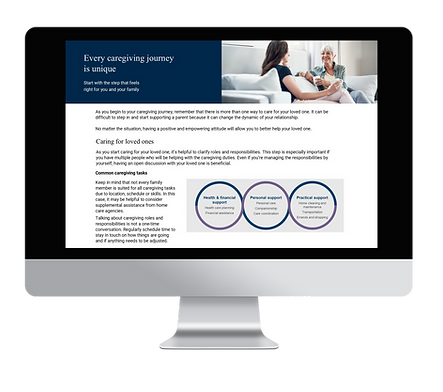
Created a systematic approach for content management and creation.
Ameriprise’s robust educational library had content with varying levels of quality. Each piece had a different structure, and users found it difficult to find information they needed.
Using an audit and content modeling, I led a team in streamlining the library and creating consistent content quality.
-
Eliminated low quality content, reducing content library by 42%
-
Developed consistent voice and visual presentation
-
Created standardized templates
Role
Director of Content
Company
Ameriprise Financial, financial services & investment firm
Project Roles
-
Team lead
-
Content strategist
-
Content designer
Deliverables
The library’s refined content strategy and UX design enabled users to more easily search, scan and understand financial content.
-
Content audit
-
Structured content model
-
Content style guide
-
Redesigned content library
Duration
12 months
DISCOVER
CONTENT AUDIT
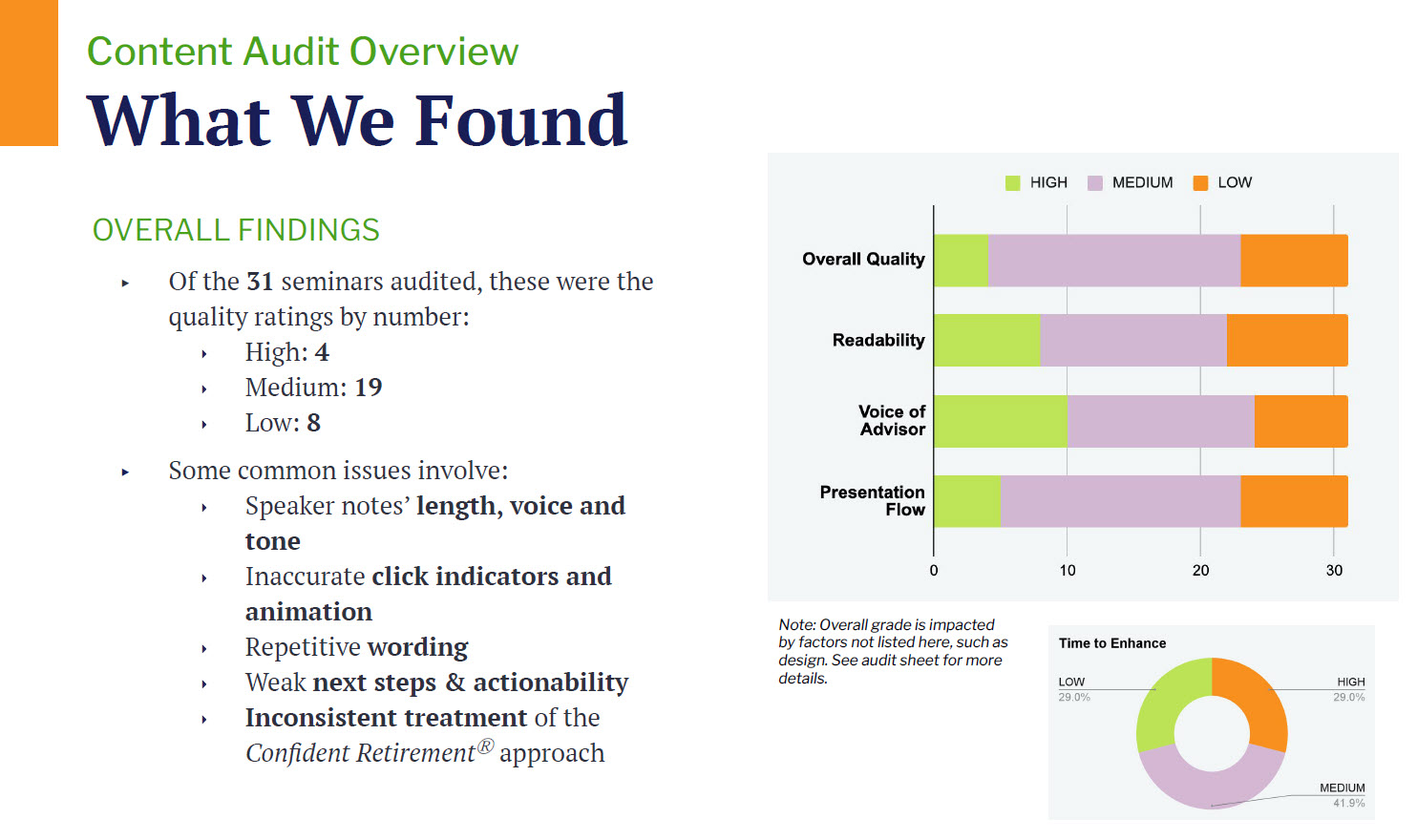
An analysis of the library revealed redundancies in content and opportunities for enhancement.
I partnered with an agency to conduct a content audit of the educational library. I provided them direction on the core elements to assess based on user needs and business goals. The final audit was a comprehensive review that evaluated:
-
Overall quality
-
Voice and tone
-
Readability
-
Content flow
-
Inconsistencies
-
Redundancies
-
Time required to enhance
DEFINE
LIBRARY ANALYSIS
Using the audit, I analyzed the deep dive review of each piece of content.
I led a content workshop with the project team, and we identified opportunities to:
-
Reduce the library size by 42% through the elimination of redundant and low-quality content
-
Enhance 45% of the library to better reflect users’ information needs
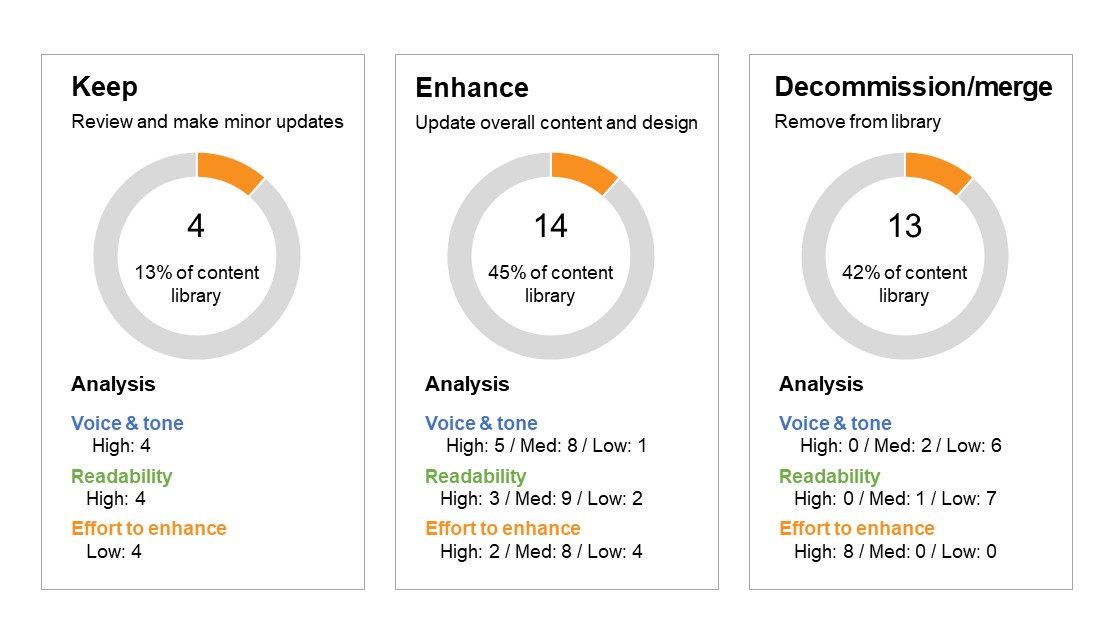
Analysis of the content library revealed that much of the library could be decommissioned due to redundancies and poor content quality.
IDEATE
CONTENT MODELING
Once the team defined the scope of the library enhancement project, we moved into standardizing the content.
I led efforts to create content models for the educational library. The new system created a blueprint for how the library’s content would be organized and managed. Using nine components, my new framework presented the information more clearly and succinctly to users.
Key benefits
Structure
Each content piece had a defined flow and predetermined components, which increased readability and scannability.
Consistency
The framework created a predictable look and feel for the content, helping users to intuitively know where to look for information.
Efficiency
Our content models enabled the team to quickly publish content and empowered business partners to develop content.

PROTOTYPE
STYLE GUIDE & CONTENT DESIGN
Once the content model was developed, I partnered with designers to bring the content to life within the digital platform.
One key element of the content prototype was developing a style guide for designers to follow. I guided a team member in documenting styles for fonts, colors, page spacing and other elements used within the educational library.


From there, I partnered with designers to layout the content. I provided guidance on creating design components for more complex content graphics.


TEST
INFORMAL USER TESTING
Testing of content architecture revealed that users spent more time consuming the content.
We conducted informal usability tests on a handful of redesigned pieces of content. From this research we found that users:
-
Were able to more easily find the educational content they were looking for
-
Appreciated the predictability and consistency created by the content models
-
Spent more time consuming the content
RESULTS
KEY PERFORMANCE INDICATORS
After the launch of the revised content, we tracked key success indicators for the redesigned content library. We found that:
-
User engagement with the content increased by 37%
-
The team was able to shorten content creation time by 1 month
-
Reducing the content library by 42% enabled the team to reallocate resources to new priorities
REFLECTIONS
KEY TAKEAWAYS
Creating a systematic approach for content management streamlined the creation process while enhancing the user experience.
01
The content audit provided an objective way to identify content gaps and enhancements within the content library.
02
Content models enabled us to better integrate the articles within the library and create a more sophisticated content strategy.
03
Knowing what to expect within each piece of content increased user engagement and enjoyment of the content.